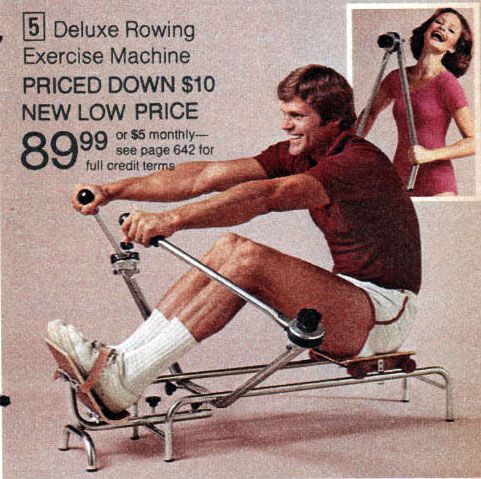

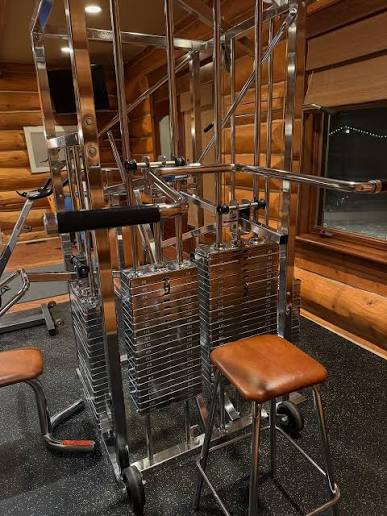
Gym equipment has changed a lot over the years, but not always in a straight line toward improvement. Some of the most interesting and well-engineered machines I’ve used are 40 or 50 years old. When you look at equipment from the late 1970s and 1980s, especially pieces like the Universal machines, there was a level of mechanical creativity that’s hard to find today. These systems were designed to be versatile, durable, and mechanically efficient. You could flip a bench press into a shoulder press, attach a platform and turn it into a leg press, and then move into pulldowns, curls, or extensions, all on the same unit. It was highly thoughtful engineering that focused on convenience.
A lot of that older equipment was built with very good mechanisms. Heavy steel frames, simple cable systems, and direct load paths made the resistance feel reliable. From a physics standpoint, fewer moving parts and more direct force transmission meant less energy loss through friction or instability. That’s part of why those machines still feel good decades later. They were overbuilt in a way that prioritized longevity and consistency.

There’s also something to be said about the tactile experience of those machines. The chrome, the weight stacks, and the way the cables moved gave immediate feedback. You could feel the load without distraction. In many ways, that aligns with what we know from motor learning research. Consistent sensory feedback helps reinforce movement patterns and improves coordination over time. When a machine behaves the same way every rep, the nervous system can focus on refining the movement instead of being alert to variability.
That said, older equipment wasn’t perfect. One of the biggest limitations was how little it accounted for individual biomechanics. Many machines followed fixed paths of motion that didn’t always match the natural arcs of human joints. The shoulder, for example, doesn’t move in a single plane, and forcing it into one can increase joint stress over time. Modern biomechanics research has shown that joint alignment and resistance influence how forces are distributed across tissues. When those don’t match the user, you get over-compensation.
It’s easy to see how newer equipment has clearly improved. Today, the better manufacturers design around human movement. They study strength curves, which describe how muscle force changes across a range of motion, and try to match the resistance profile of the machine to that curve. This is why you’ll see variable resistance systems, cam designs, or curved treadmill belts. The designers try to keep tension more consistent where the muscle is strongest and reduce unnecessary strain where it’s weaker.
When I evaluate a machine now, I’m paying attention to that alignment. Does the axis of rotation line up with the joint? Does the machine allow small adjustments so different body types can use it properly? These might seem like small details but if done right, they can improve the exercise experience for thousands of people.

Reliability is another area where both old and new equipment can either succeed or fail. The difference is that today, the expectations are much higher. In a hotel or residential gym, one machine being out of order changes how people perceive the entire space. There’s research in environmental psychology showing that small signs of disorder reduce trust and engagement in shared spaces. In a gym, that translates to people using the facility less.
That’s why I prioritize brands that have a reputation for durability and precision. Equipment that feels the same on day one and day one thousand. From a behavioral standpoint, consistency matters. If a machine feels different every time, people hesitate. If it feels stable and predictable, they engage more confidently.
Cardio equipment is probably where the biggest scientific shift has happened. Earlier machines were mostly about steady-state output. Now, they incorporate feedback systems that influence behavior in real time. Studies on exercise adherence consistently show that feedback and self-monitoring improve engagement. That’s one reason Concept2 rowers and Woodway treadmills stand out. They provide accurate, repeatable data, which allows users to track progress in a meaningful way.
At the same time, not all technological additions are useful. There’s a point where too much interface gets in the way of movement. If someone has to think too much about how to use a machine, it takes away from the training itself. Especially if they are a new gym-goer who may feel embarrassed adjusting a machine.

Where things have really evolved is in how we select and combine equipment. No single brand is best at everything, so I don’t design that way. I’ll use one company for strength because of their biomechanics, another for cardio because of their durability, and others for accessories or recovery.
In more recent projects, I’ve been leaning into more specialized pieces as well. Equipment that offers movement options people don’t typically get access to. Outdoor strength setups. Non motorized cardio. Cable systems that allow for more freedom of movement. These choices are intentional.
At Hualalai, for example, we didn’t try to force everything into one room. We created multiple environments, each with equipment that fits its purpose. That reduces interference between different types of training and improves the overall experience. From a scientific perspective, that also aligns with how context influences behavior. When a space is clearly defined, people use it more effectively.
So when I look at where we are now, I don’t think it’s about old versus new. The older equipment got a lot of things right in terms of durability and mechanics. The newer equipment has improved in biomechanics, adaptability, and data integration. The best approach is to take both seriously.
(cover photo from Pinterest, JTX Fitness)

.svg)